Travelling Library
 How-to Cite

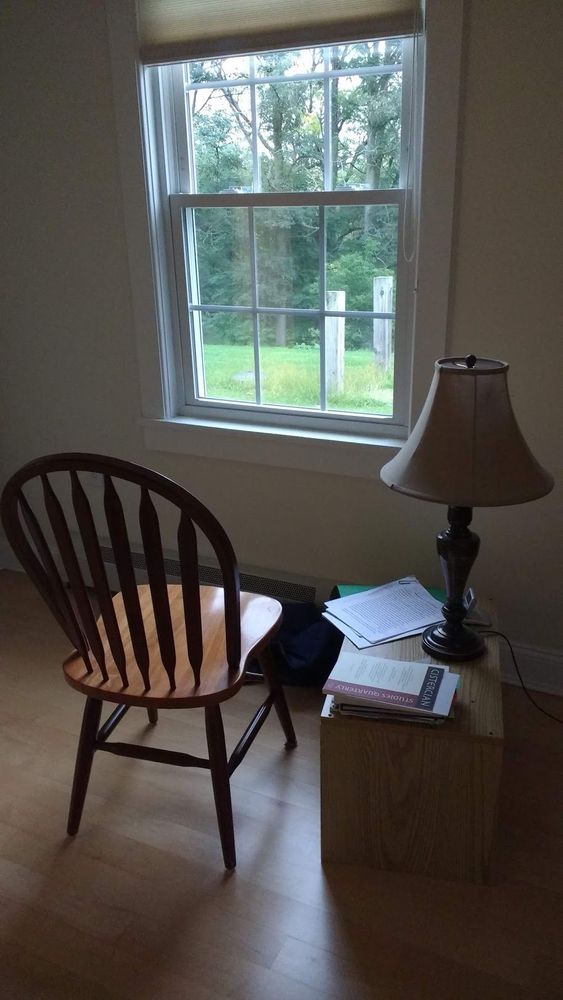
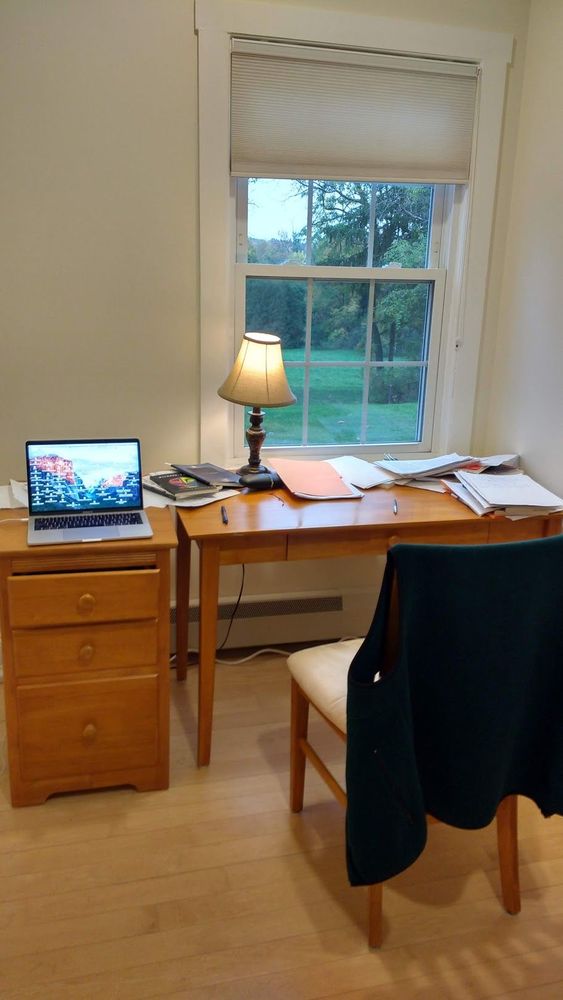
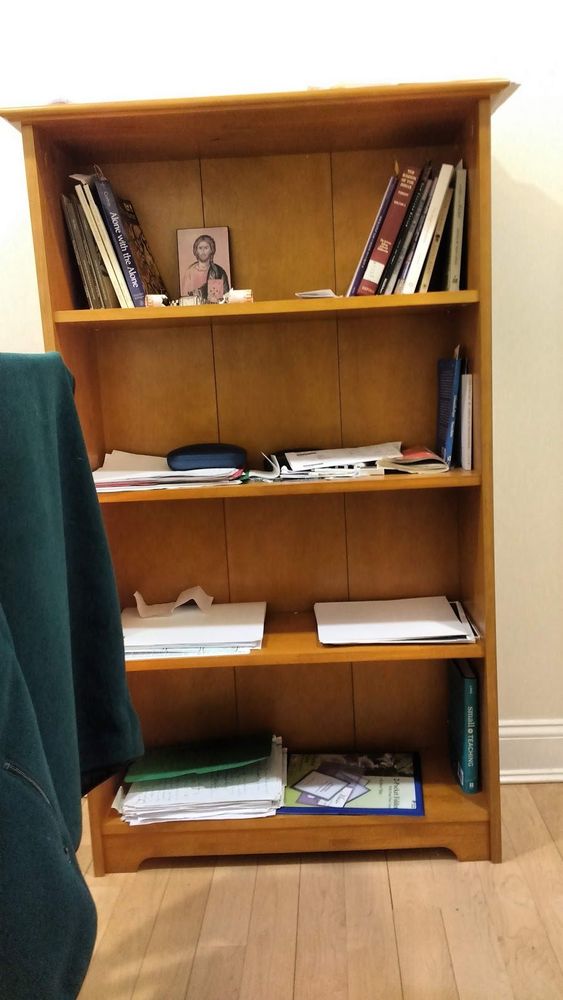
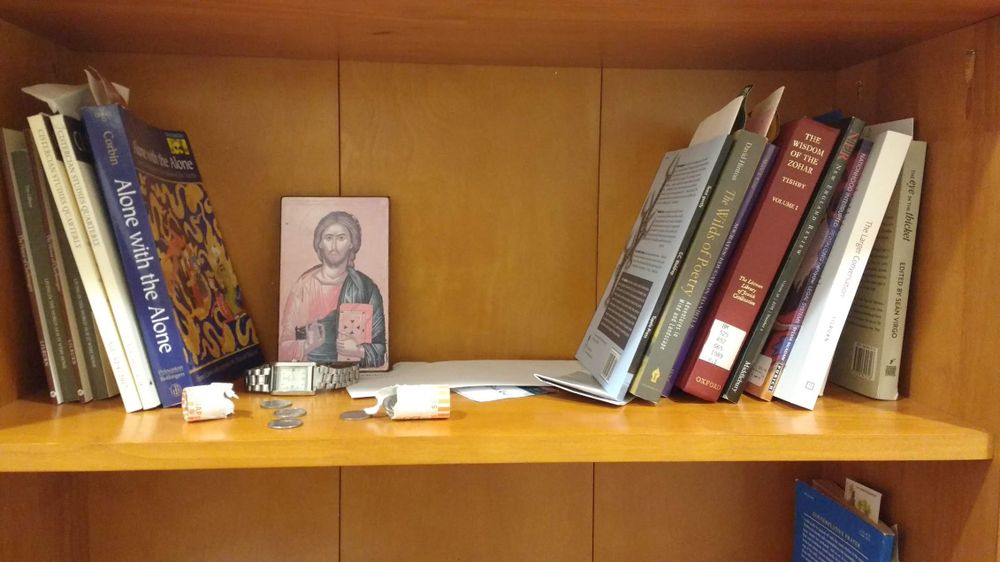
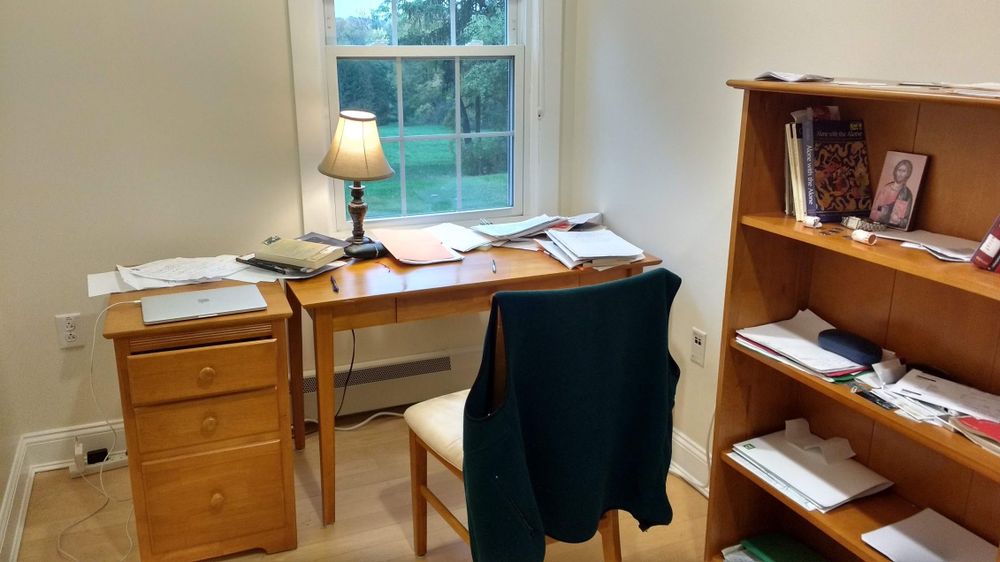
I am away from my library this autumn, teaching at a college in Vermont, and I miss it, those towers of books rising from the floor in my writing shed, the disorganized shelves. I’ve brought a remnant of all that with me as part of my essential supplies, having spent a couple of weeks this summer mulling over what to include in this pack of rations.
First there is the poetry, beginning with Gregory Scofield’s Witness, I Am. I heard him read part of the book’s opening long poem “Muskrat Woman” at a Malahat Review event in Victoria a couple of years ago and realized I hadn’t heard anything like it before. It flattened me then and still does. On the same shelf next to the desk where I look out onto the Green Mountains, is G.C. Waldrep’s new collection feast gently. I can’t think of anyone who writes quite like Waldrep; no one else imagines architecture taken up in the Rapture, where “the god of small houses” marries the god of disappearing bees, no one else is shocked from sleep in the midst of a storm thinking “antler candling.” His audacious imagination is a tonic, a bearing wall for me; his wit, humanity and deep probe all make me grateful for him.
Then I’ve packed a certain amount of philosophy – contemplative, epistemological, political. There’s singing here too. Henry Corbin’s Creative Imagination in the Sufism of Ibn ‘Arabi, the 1998 edition with the peculiar patched-on Plotinian title Alone with the Alone and a preface by Harold Bloom, is a book I have been wandering in, more lost than not, for fifteen years. Corbin, who taught at the Sorbonne and the University of Tehran, brought out Creative Imagination in 1958. He was one of the great scholars of Islamic philosophy – he’d likely say theosophy – in the twentieth century, and the thought of Ibn ‘Arabi was his chief preoccupation, though he also wrote at length about the Persian thinker Suhrawardi and Avicenna. European philosophy has nothing like the range and shocking acuity of either of the first two of these contemplatives, with the possible exception of the Franciscan Bonaventure, but even he can’t match this pair’s wingspan and anagogic power.
I also have with me Nationhood Interrupted: Revitalizing nêhiyaw Legal Systems by Sylvia McAdam (Saysewahum), a revelatory and revolutionary book; I’m using sections from it in the course packs of the two classes I am teaching this term at Middlebury College, an environmental studies class on nature writing and a sophomore “great books” seminar. I am also giving a series of lectures to faculty and staff here on contemplative practices and contemplative pedagogies, so have brought along Thomas Merton’s Contemplative Prayer, as well as two recent issues of Cistercian Studies, one of them containing millennial Evan Bednarz’s surprising and oddly sad essay “Disappearing: An American Vocation.” All these books, the poetry and philosophy, make up what I imagined I’d need to start a bit of a new life.
I’ve no idea why I was so distressed from a library point of view about making this move. The New England Review is based at Middlebury College, and the College’s Davis Family Library, as well as being one of the most beautiful university libraries I’ve seen, is reasonably well stocked. Its section on Zohar scholarship easily outstrips anything I’ve seen elsewhere. Here I found Melila Hellner-Eshed’s A River Flows from Eden: The Language of Mystical Experience in the Zohar, an eye-opening and stretching book and new scholarship. I’ve also found on the shelves first edition copies of Christopher Okigbo’s Labyrinths from the Ibadan’s Mbari Press from the early 1960s, books so rare I am surprised the Nigerian government hasn’t sent over a reclamation team to take them home.
But the library riches of Middlebury aside, I wanted my own cache. Western North America burns now every summer and autumn, politics in many places worldwide grows fangs. Through particular imaginations – brave, exegetical, funny, trellis-like – one lives. This sort of the living, in my way of seeing things, is not an escape from politics, but a journey into its heart. It’s an especially peculiar time to be in the United States, and I have felt it to be a form of exile for me. Like Ezekiel, daemon of expulsion, as he digs through the city’s walls, his eventual destination unclear, I’ve carried a condensed version of all my theurgic belongings, these books I mention here, on my back.
Gallery
How-to-Cite
MLA
Lilburn, Tim. “Travelling Library.” Shelf Portraits, 25 June, 2021, richlerlibrary.ca//shelf-portraits/travelling-library. Accessed 3 April, 2026.
APA
Lilburn, Tim. (2021, June 25). Travelling Library. Shelf Portraits. https://richlerlibrary.ca//shelf-portraits/travelling-library
Chicago
Lilburn, T. “Travelling Library.” Shelf Portraits, 25 June, 2021, https://richlerlibrary.ca//shelf-portraits/travelling-library.

Tim Lilburn
Tim Lilburn is the author of twelve books of poetry, including The House of Charlemagne, Assiniboia, Orphic Politics, Kill-site, and To the River. His work has received the Governor General’s Award and the Saskatchewan Book of the Year Award, among other prizes. Lilburn is also the author of three essay collections, Living in the World as if It Were Home, Going Home and The Larger Conversation: Contemplation and Place, and editor of two other influential books on poetics. He teaches at the University of Victoria. His newest book of poetry, Harmonia Mundi, will be published by Corbel Stone Press (UK) in April.